
The People’s Failure to Hear
Thus Spoke ZarathustraThis flow follows the widening emotional distance between Zarathustra and humanity as public laughter, social hostility, and private teaching reshape his mission.
increasing Bearing strength in each event
 decreasing
Bearing strength in each eventdecreasingThe Saint’s Misunderstanding

The Saint’s Misunderstanding
Two kinds of love
The old saint says that love of humanity drove him into the forest, while Zarathustra says that he loves people and brings them a gift. Their disagreement exposes different responses to disappointment.
The distance persists
The saint’s devotion to God separates him from Zarathustra’s earthly mission. They part without hostility, but neither can join the other’s understanding.
The Marketplace Laughs

The Marketplace Laughs
A public rejection
Zarathustra announces the Superman, but the crowd laughs and asks for the Ultimate Man instead. The reaction makes his first attempt at fellowship emotionally isolating.
A new audience sought
He recognizes that he is not the mouth for these ears. The rejection does not end his mission, but redirects his hope toward companions rather than the crowd.
The Good and Just Oppose Him

The Good and Just Oppose Him
A hostile reception anticipated
The buffoon warns Zarathustra that the good and just and the faithful consider him dangerous. Their hostility arises because he challenges the values they protect.
Solitude becomes protection
Zarathustra leaves the town rather than attempt to win approval through compromise. The experience deepens the distance between his creative purpose and established social belonging.
Private Teaching Replaces Public Address
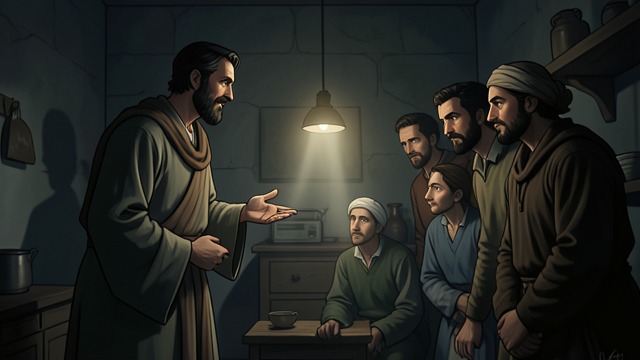
Private Teaching Replaces Public Address
A new form of address
Zarathustra resolves to speak to companions who want to follow themselves. He seeks creators and harvesters rather than a herd of believers.
A more intimate burden
The change gives his teaching a chance to be heard but makes communication more selective. He must now form relationships without turning them into obedience.
The Great City Passed By

The Great City Passed By
Contempt meets a mirror
Zarathustra’s Ape warns him that the city corrupts great thoughts, but Zarathustra rejects the Ape’s resentful manner. Their exchange shows how easy it is to imitate his critique without sharing its creative purpose.
The rule of departure
Zarathustra tells the Ape to pass by where love is no longer possible and continues on his own way. Alienation becomes a deliberate boundary rather than an appeal for acceptance.
On the forest path during Zarathustra’s descent
Early in Part One
After Zarathustra leaves the marketplace
At dawn after Zarathustra sleeps in the forest
Part Three, as Zarathustra reaches the city gate
